
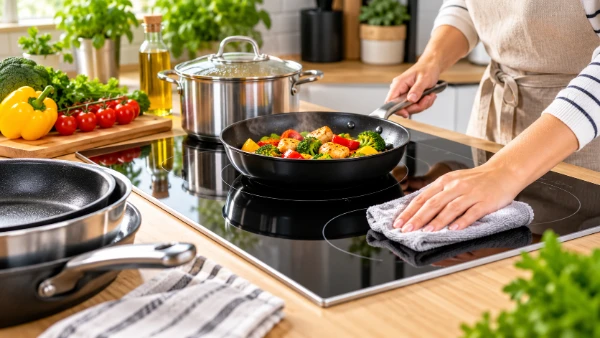
How to Use an Induction Hob Correctly Without Damaging It: Cookware, Cleaning and Common Mistakes
An induction hob can make everyday cooking quicker and easier, but its smooth glass surface and magnetic heating system require slightly different habits from those used with gas or conventional electric hobs. Most problems are not caused by normal cooking. Scratches, poor heating, stubborn marks and damaged glass are usually linked to unsuitable pans, rough pan bases, spills left on the surface or incorrect cleaning. Learning a few simple rules is therefore more useful than treating an induction hob as a particularly fragile appliance. The most important points are to use compatible cookware, keep both the glass and pan bases clean, control high power settings sensibly and clean spills with products intended for glass-ceramic cooking surfaces.
Choosing the Right Cookware for an Induction Hob
Induction cooking works by creating a magnetic field beneath the glass, which generates heat in compatible cookware rather than heating the cooking zone in the same way as a traditional electric hob. This means the pan itself is an essential part of the heating process. Cookware made from cast iron, carbon steel, enamelled steel and suitable grades of stainless steel generally works well. Aluminium, copper, glass and ceramic pans normally do not work on their own unless their bases contain a magnetic layer specifically designed for induction cooking.
The easiest household test is to place an ordinary magnet against the bottom of a pan. If the magnet holds firmly, the pan is likely to work on an induction hob. A weak attraction may still allow the hob to detect the cookware, but heating can be slower or less even. When buying new cookware, look for the induction symbol on the base or packaging as well. Stainless steel deserves particular attention because not every stainless-steel pan is magnetic. Two pans that look almost identical can behave very differently on an induction zone because of the composition of their bases.
Material is only part of the decision. A good induction pan should have a flat, smooth and reasonably substantial base. A warped base reduces contact with the cooking area and can lead to uneven results, noise or poor pan detection. Rough edges, burrs and dirt underneath cookware can also mark the glass. Heavy cast-iron pans are compatible with induction, but their weight means they should be placed down gently. Dragging a cast-iron casserole or frying pan across the hob can produce scratches even though the cookware itself is perfectly suitable for induction cooking.
Pan Size, Shape and Position Matter More Than Many Users Expect
The diameter shown by a cookware manufacturer often refers to the top rim rather than the magnetic section underneath, so it is worth looking at the actual base before buying a pan. The magnetic area should correspond reasonably well with the cooking zone being used. A very small magnetic base on a large pan may heat only the centre effectively, while cookware below the minimum size recognised by a particular hob may not be detected at all. Minimum and maximum pan sizes vary between models, so the appliance manual remains the best reference when a pan repeatedly fails to heat.
Modern induction hobs sold in 2026 increasingly include flexible or bridge zones that can combine cooking areas for griddles, roasting pans and larger cookware. These functions offer more freedom, but they do not remove the need for a suitable magnetic base. Large oval or rectangular cookware should be positioned according to the manufacturer’s instructions so that the active sections of the base sit correctly over the induction coils. Covering controls with oversized cookware is also best avoided because heat from the pan and accidental contact can interfere with touch controls on some models.
Keep the underside of every pan clean and dry before placing it on the hob. Salt crystals, dried food, grit and other hard particles trapped beneath cookware can behave like an abrasive when the pan moves. Water on the base is less likely to cause permanent damage, but it can leave marks and may contribute to unwanted noise while cooking. A useful routine is simply to check the base with your hand before setting a pan down. It takes seconds and prevents many of the fine scratches that otherwise accumulate over months of regular use.
How to Cook on Induction Without Overheating or Damaging the Surface
One of the biggest adjustments when moving to induction is the speed at which cookware responds. High settings can bring water to the boil very quickly, and many hobs include a PowerBoost or similarly named function for an additional short burst of power. This is useful for boiling a large pan of water, but maximum power is rarely necessary for the entire cooking process. Once the required temperature is reached, reducing the setting gives better control and lowers the chance of food boiling over, oil overheating or an empty pan becoming excessively hot.
Avoid leaving empty cookware on an active cooking zone, particularly at a high setting. Because induction transfers energy directly into a compatible pan, an empty base can become extremely hot in a short period. Some current appliances have temperature monitoring and automatic protection functions, but these features should be treated as safeguards rather than a normal way to control cooking. Excessive heat can damage coatings, discolour cookware and place unnecessary thermal stress on the pan and glass. Preheating a frying pan should therefore be brief and supervised.
The glass around an induction zone does not generate heat in the same manner as a conventional ceramic hob, but it still becomes hot because the pan transfers heat back to it. Residual-heat indicators should therefore be taken seriously. Removing a saucepan does not mean that the glass is immediately safe to touch or clean. At the same time, induction surfaces usually cool faster than conventional radiant ceramic zones because the cooking surface is not the primary heat source. Waiting for the appropriate temperature before routine cleaning reduces the risk of burns and prevents cleaning products from drying onto hot glass.
Everyday Cooking Habits That Protect Both the Hob and the Pans
Lift cookware when changing its position instead of sliding it from one zone to another. This single habit makes a considerable difference to the appearance of a glass hob over time. It is especially important with cast iron, enamelled cookware and pans whose bases have become rough through years of use. Before placing an older pan on a new induction hob, inspect the base carefully. A pan that worked without obvious problems on a metal gas support may have accumulated rough deposits or minor damage that becomes much more significant when it sits directly on glass.
Use cookware that remains stable when placed on a flat worktop. A pan that rocks because its base is distorted will also sit poorly on an induction hob. Besides reducing heating efficiency, an unstable pan can move unexpectedly while food is being stirred. Handles should be positioned so that they do not extend over adjacent hot cookware or beyond the edge of the worktop. Lids also help with efficiency for boiling and simmering because less heat and steam escape, allowing many dishes to cook satisfactorily at a lower setting.
Some humming, clicking, buzzing or faint whistling during induction cooking can be normal. The sound may come from the cookware, electrical switching or the appliance cooling fan, and multi-layer pan bases can be more noticeable at high power. A noise on its own does not necessarily indicate a fault. If a previously quiet pan suddenly begins to vibrate strongly, repeatedly loses detection or heats unevenly, however, check that its base is clean and flat and try it on another suitable zone. Persistent problems affecting several compatible pans are better investigated using the appliance manual or authorised service guidance rather than by continuing to use the hob at maximum power.
Cleaning an Induction Hob Without Scratching the Glass
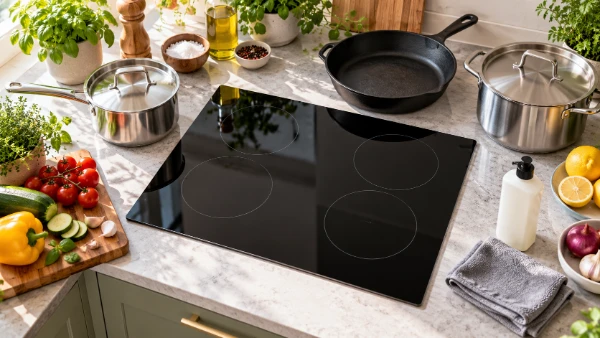
Routine cleaning is easiest after cooking, once the surface is cool enough for the method recommended by the manufacturer. Loose crumbs should be removed first so that they are not rubbed across the glass. For ordinary grease and cooking marks, a soft damp cloth or non-abrasive sponge with a cleaner approved for ceramic or induction hobs is normally sufficient. Afterwards, wipe away cleaner residue and dry the surface with a soft cloth. Abrasive powders, metal scourers and harsh cleaning pads should not be used because they can permanently dull or scratch glass-ceramic surfaces.
Burnt-on residue requires more care than more force. Manufacturers including Bosch and Electrolux recommend dedicated hob scrapers for suitable glass-ceramic surfaces. A scraper should be used in accordance with the instructions supplied with the appliance or cleaning tool rather than with an improvised knife or other sharp kitchen utensil. Once the deposit has been removed, the area can be cleaned with the appropriate hob cleaner and wiped dry. Scraping is not a reason to apply excessive pressure, and special surface finishes may have their own cleaning instructions, so model-specific guidance takes priority.
Sugar, food containing a large amount of sugar, melted plastic and plastic film deserve immediate attention because manufacturers warn that these substances can damage a glass-ceramic surface if allowed to remain on it. Follow the appliance instructions and take particular care because the cooking area may still be hot. Ordinary water marks, grease, limescale rings and many metallic-looking deposits can generally wait until the surface has cooled. Cleaning spills promptly also prevents layers of residue from building up around frequently used zones and reduces the amount of scraping needed later.
Common Induction Hob Mistakes and How to Avoid Them
One of the most common mistakes is assuming that anything described as metal cookware will work on induction. Copper and aluminium are metals, yet cookware made solely from these materials is normally unsuitable because the hob requires a magnetic base. Another mistake is testing only the side of a pan with a magnet rather than the part that actually sits on the cooking zone. Check the base itself. If a hob repeatedly switches off or refuses to recognise one particular pan, incompatibility, insufficient magnetic area or an unsuitable base size is more likely than a failure of the appliance.
Another frequent source of damage is using the hob as extra worktop space. Shopping bags, chopping boards, lids, utensils and food packaging should not be stored on the glass, especially when the appliance has recently been used. Plastic placed on residual heat can melt, while a hard object dropped onto the surface can chip or crack it. Induction glass is designed for cooking, but it is not immune to impact. Take particular care with heavy jars, spice grinders and bottles kept in cupboards above the hob, as objects falling from height can cause much more serious damage than normal cookware.
Finally, do not assume that all induction hobs should be operated or cleaned in exactly the same way. Functions such as flexible zones, automatic pan detection, boost modes, temperature sensors, child locks and residual-heat displays differ between manufacturers and models available in 2026. Surface finishes also vary, including conventional glossy glass and newer matt glass-ceramic designs with their own care requirements. The safest routine is simple: use magnetic cookware with a clean, flat base, lift rather than drag pans, avoid unnecessary maximum heat, deal with damaging spills promptly and follow the cleaning instructions supplied for the exact appliance. These habits protect the glass, improve cooking results and help an induction hob remain in good condition through years of regular household use.