
Kitchen Pests in Flour and Grains: How to Find the Source and Eliminate Them for Good
Finding tiny beetles or moth larvae in flour, rice or oats is unpleasant but, unfortunately, common in many households across the UK. By 2026, food storage habits have improved, yet pantry pests such as grain weevils and Indian meal moths remain a persistent issue, especially in centrally heated homes. The key is not simply throwing away one packet, but identifying the source, removing every stage of infestation, and changing storage habits so the problem does not return.
Which Pests Live in Flour and Grains and Why They Appear
The most common culprits in British kitchens are grain weevils (Sitophilus granarius), flour beetles (Tribolium species) and Indian meal moths (Plodia interpunctella). Weevils are small brown beetles that bore into whole grains such as rice and pasta. Flour beetles prefer milled products like plain flour or semolina. Indian meal moths are often noticed when small moths begin flying around cupboards in the evening.
In most cases, pests enter the home inside shop-bought products. Eggs can already be present in grains at the packaging stage, especially in bulk storage environments. Once inside a warm kitchen, central heating accelerates their life cycle. At 20–30°C, development from egg to adult can take as little as four to six weeks.
Poor storage conditions also contribute. Thin paper or plastic packaging is easy for beetles to chew through. Opened packets left unsealed allow adult insects to lay new eggs. Even small traces of flour dust in cupboards can support larvae, meaning an infestation may spread from one neglected packet to several shelves.
How to Identify the True Source of Infestation
Do not assume the visible packet is the origin. Empty the entire cupboard and inspect every dry product: flour, rice, pasta, lentils, breakfast cereals, nuts, spices, pet food and even dried herbs. Look for fine webbing, clumped grains, tiny holes in packaging and moving larvae.
Pay attention to corners and shelf joints. Indian meal moth larvae often crawl away from food to pupate along cupboard edges or under shelf brackets. If you only discard the visibly contaminated item but ignore hidden larvae, adults will reappear weeks later.
Check recently purchased products first. If you introduced a new bag of rice or flour shortly before noticing insects, that is likely the starting point. In multi-pack storage areas, infestation often spreads from one product across the entire shelf within a month.
Step-by-Step Removal: From Cleaning to Safe Disposal
Once you confirm infestation, dispose of all affected items immediately. Seal them in a thick bin liner, tie it tightly, and take it outside to the main rubbish container. Avoid leaving infested food in indoor bins, as adults can escape.
Vacuum the cupboard thoroughly, including corners, shelf edges and screw holes. Dispose of the vacuum bag afterwards if possible. For bagless models, empty the container outdoors and wash it. This removes eggs and larvae invisible to the naked eye.
After vacuuming, wash all surfaces with hot soapy water, then wipe with a solution of white vinegar. Vinegar does not kill all eggs directly but helps remove pheromone traces that attract further egg-laying. Allow cupboards to dry completely before restocking.
Freezing and Heat Treatment: When They Are Effective
If only one unopened packet shows early signs and you wish to salvage other dry goods, freezing can help. Place suspect but not visibly infested products in the freezer at −18°C for at least 72 hours. This kills eggs and larvae of most pantry beetles and moths.
Heat treatment is another method. Grains can be heated in an oven at around 60°C for 15–20 minutes, which is sufficient to kill insects without cooking the product. However, this may affect texture in delicate items such as wholemeal flour.
These treatments work only for prevention in unaffected goods. Heavily contaminated food should never be saved. Consuming products with insect waste can cause digestive discomfort and is not considered safe.

How to Prevent Reinfestation in 2026 Kitchens
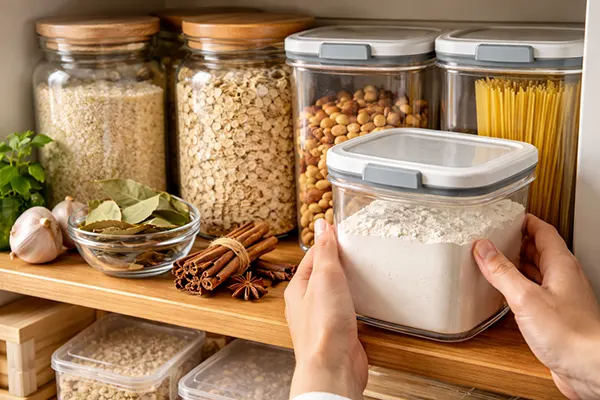
Prevention depends largely on storage. Transfer flour, rice and cereals into airtight glass, metal or high-quality BPA-free plastic containers immediately after purchase. Thin shop packaging is not designed for long-term storage.
Keep cupboards clean and dry. Even a small accumulation of flour dust provides feeding material. Wipe shelves monthly and inspect stock regularly. Follow a simple rotation rule: use older products first and avoid buying large quantities unless you have sealed storage.
In warmer months, especially in well-insulated modern flats, temperatures inside cupboards may exceed 22°C. Consider storing rarely used grains in the refrigerator if space allows. Lower temperatures significantly slow insect development.
When to Consider Professional Help
If moths continue appearing after thorough cleaning, the infestation may have spread beyond the cupboard. Larvae can hide behind kitchen panels or in ceiling voids. Persistent cases sometimes require professional pest control assessment.
Professionals use pheromone monitoring traps to confirm species and evaluate infestation level. These traps are useful for monitoring but should not be relied upon as the sole solution, as they attract only adult males.
Repeated infestations often indicate a structural issue: gaps in cabinetry, poor sealing, or long-term storage of bulk dry goods. Addressing these underlying factors is essential to eliminate the problem permanently rather than dealing with recurring cycles every few months.