
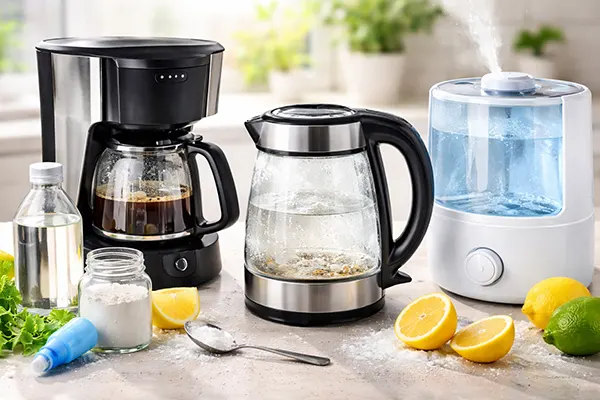
Descaling Without Damage: Caring for Kettles, Coffee Makers and Humidifiers in Hard-Water Areas
In regions with hard water, limescale is not a cosmetic issue but a practical one. Mineral deposits affect heating elements, seals, sensors, and even taste and air quality. Proper descaling extends appliance life, reduces energy waste, and prevents avoidable breakdowns. The key is choosing the right method for each device and applying it with restraint rather than force.
Choosing the Right Descaling Agent for Hard Water
Household vinegar, citric acid, and ready-made descalers work in different ways and are not interchangeable. Vinegar is acidic and effective against calcium carbonate, but its strong smell and aggressive action can damage rubber seals and leave lingering odours, especially in enclosed systems.
Citric acid is milder and more predictable. When diluted correctly, it dissolves limescale without attacking metal or silicone parts. For most domestic appliances, it offers a safer balance between effectiveness and material compatibility.
Commercial descaling products are designed for specific temperature ranges and internal layouts. They are often buffered to protect aluminium and plastics. While more expensive, they are the safest option for capsule coffee machines and appliances under warranty.
When Each Method Is Appropriate
Vinegar may be acceptable for open systems like basic electric kettles, provided it is heavily diluted and followed by thorough rinsing. It should not be used in coffee machines with pumps, valves, or pressure systems.
Citric acid suits most household appliances, including drip coffee makers and ultrasonic humidifiers. It works best with warm water and short contact times, avoiding prolonged soaking.
Ready-made descalers are recommended for capsule machines, bean-to-cup systems, and devices with narrow internal tubing. They reduce the risk of residue and clogging, which is critical in precision equipment.
How Often to Descale and Signs That It Is Time
Descaling frequency depends on water hardness, usage intensity, and heating temperature. In hard-water areas, kettles and coffee machines usually require attention every four to eight weeks, while humidifiers may need lighter but more frequent cleaning.
Visible scale flakes, longer heating times, unusual noises, and reduced steam or water flow are practical signals. Taste changes in tea or coffee and white dust around humidifiers are also early indicators.
Ignoring these signs increases energy consumption and accelerates wear on heating elements. Regular, moderate descaling is more effective than infrequent aggressive treatments.
Why Over-Descaling Can Be Just as Harmful
Using overly concentrated solutions strips protective surface layers from metals and dries out rubber seals. This leads to leaks and sensor errors, particularly in modern coffee machines.
Excessive descaling cycles also increase the risk of residue being trapped inside narrow channels. In some cases, loosened scale can clog valves instead of being flushed out.
Following a consistent schedule based on real usage, rather than assumptions, keeps appliances stable and predictable in daily operation.
Device-Specific Descaling: Practical Instructions
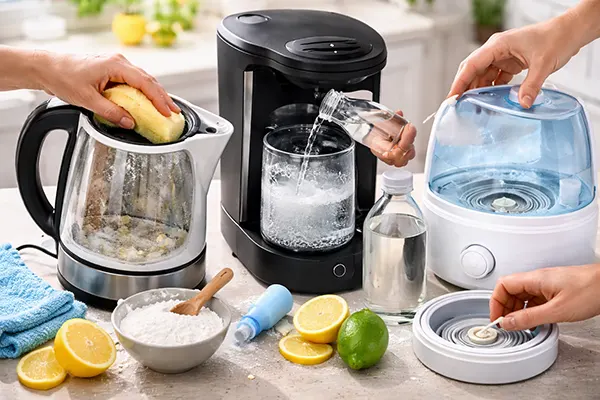
Electric kettles are the simplest case. Fill the kettle with warm water and add a mild citric acid solution. Heat briefly without boiling, leave for ten to fifteen minutes, then rinse several times until no residue remains.
Drip coffee makers require a slow cycle. Run a diluted citric solution through the system, pause halfway, then complete the cycle. Follow with two full water-only cycles to clear internal pathways.
Humidifiers should never be soaked indiscriminately. Remove scale from the tank using a soft cloth and diluted solution, avoiding sensors and membranes. Rinse thoroughly to prevent airborne residue.
Common Mistakes That Shorten Appliance Life
One of the most frequent errors is increasing concentration to “speed things up”. This often damages gaskets and shortens component lifespan without improving results.
Insufficient rinsing leaves acidic residue that continues to react during normal use. This is a common cause of off-flavours in coffee and irritation from humidifier mist.
Another overlooked issue is mixing products. Combining vinegar, citric acid, or commercial cleaners creates unpredictable reactions and should be avoided entirely.